
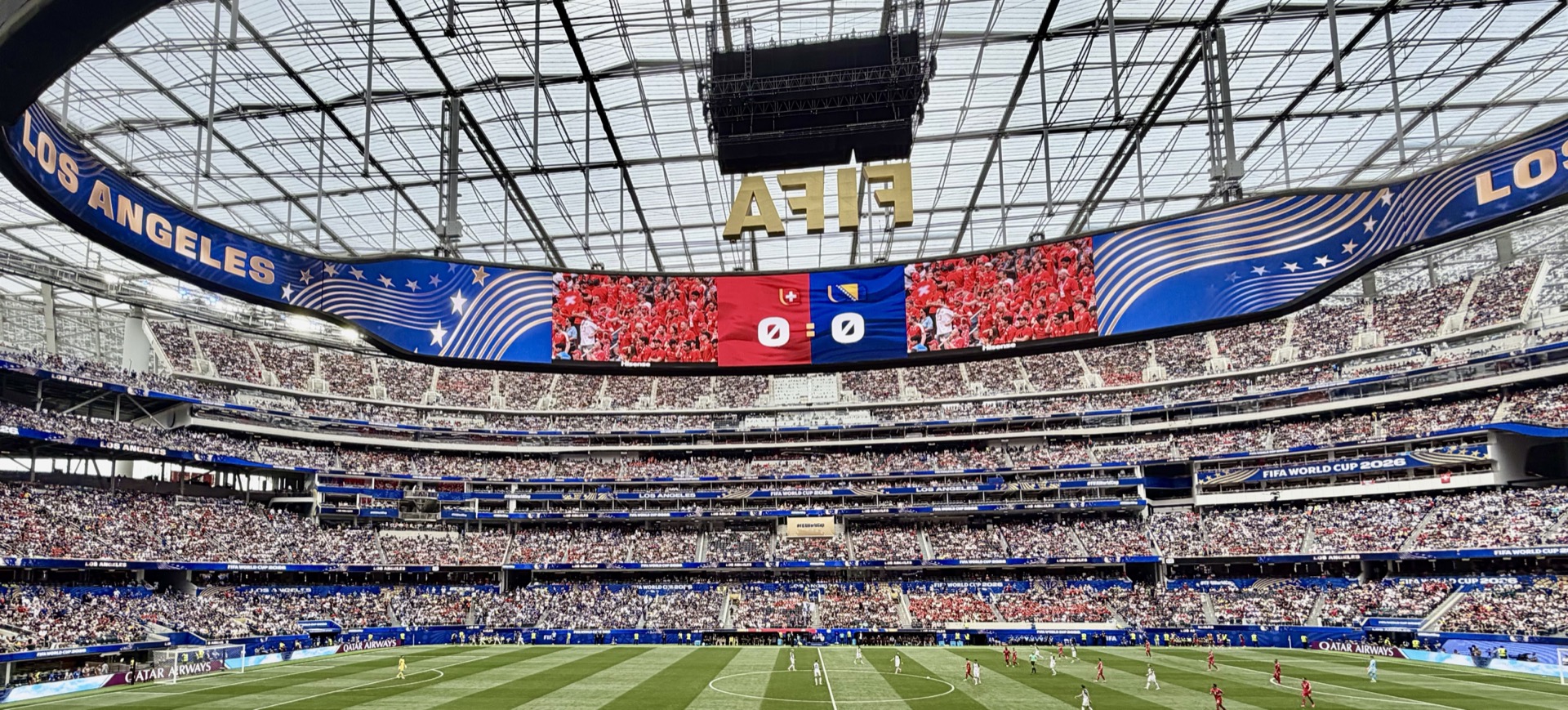
The 2026 FIFA World Cup is in full swing across the United States, Canada and Mexico — and it is, by some distance, the most physically demanding tournament in the competition’s history. More teams, more matches, more travel, brutal summer heat and high-altitude venues have turned this World Cup into an endurance test as much as a football one. For anyone interested in human performance — including those who train hard and pay attention to recovery pharmacology — the conditioning story behind this tournament is genuinely fascinating. Here’s the science of what these players’ bodies are going through, and where the performance-enhancement question inevitably enters.

The format that changed the physical equation
This is the first World Cup hosted by three nations and the first to feature 48 teams, up from 32. The structural facts are worth stating plainly because they drive everything that follows:
- 48 teams in 12 groups of four, with the top two and the eight best third-placed teams advancing to a new round of 32.
- 104 matches in total — up from 64 at previous tournaments.
- 39 days of competition (11 June to 19 July 2026), longer than the 32-day tournaments of 2014 and 2018.
- 16 host cities — 11 in the USA, 3 in Mexico, 2 in Canada — opening at the Estadio Azteca in Mexico City and finishing at MetLife Stadium in the New York–New Jersey area.
For a team that goes deep, that means more matches, separated by short recovery windows, played across enormous distances and wildly different climates. It is the single biggest recovery challenge international football has ever set.
Heat and altitude: the two silent opponents
Two environmental factors make 2026 uniquely punishing:
- Altitude. Mexico City’s Estadio Azteca sits at roughly 2,240 metres above sea level, where oxygen availability is meaningfully lower than at sea level. Aerobic performance drops, and recovery between high-intensity efforts gets harder.
- Heat and humidity. Many US venues face extreme summer conditions, which is exactly why hydration breaks have become a talking point of this tournament. Core-temperature management is now a tactical variable, not an afterthought.
The combination forces sports-science teams to push recovery to its limits — and it’s precisely in that gap, between what the body can naturally recover from and what the schedule demands, that the temptation toward pharmacological help has always lived.
How elite teams legally manage recovery
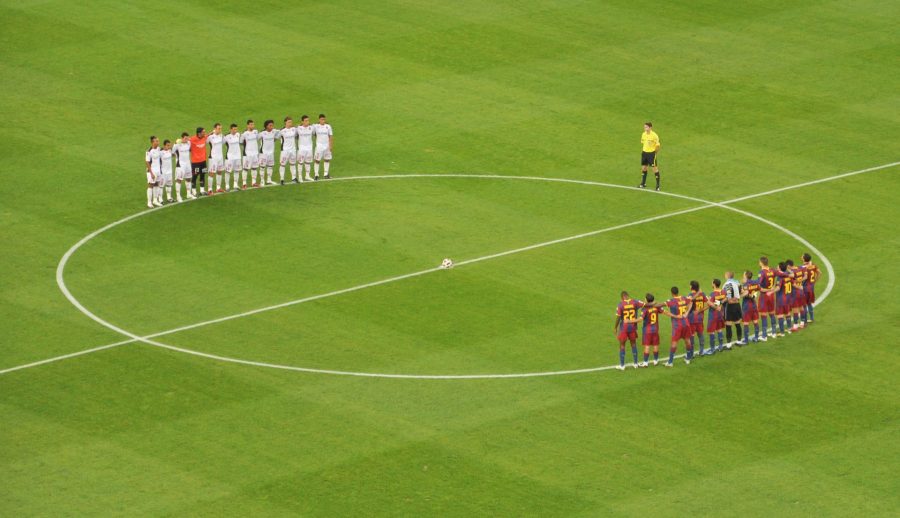
Before anyone reaches for banned substances, modern national teams deploy a serious toolkit. This is the legitimate side of performance — and a lot of it is directly applicable to anyone training hard:
- Sleep engineering — controlled light exposure, travel-timed naps, and chronobiology to fight jet lag across time zones.
- Nutrition periodisation — carbohydrate timing around matches, targeted protein for repair, and aggressive rehydration protocols.
- Cold-water immersion and compression to manage inflammation and perceived soreness.
- Load monitoring via GPS and heart-rate data to decide who plays, who rests, and who rotates.
At a 48-team World Cup, the team that recovers fastest — not necessarily the most talented — often lifts the trophy.
Where performance-enhancing drugs enter the picture
Football has always insisted it is “cleaner” than cycling or athletics, but the history says otherwise — and the physical demands of 2026 raise the stakes. The compounds historically most relevant to football aren’t the mass-builders bodybuilders chase; they’re recovery and endurance agents. We covered the full picture in our deep dive on steroids and the 2026 FIFA World Cup, but the short version:
- Low-dose anabolics for faster muscle repair between matches, not for size.
- EPO and blood manipulation to offset the aerobic cost of heat and altitude.
- Peptides and growth factors aimed at soft-tissue and injury recovery on tight return-to-play deadlines.
To be clear about the facts: as of the group stage, no major doping scandal has emerged at the 2026 tournament. The controversies making headlines so far have been disciplinary and political — red-card disputes, fixture and officiating rows, and off-pitch legal stories — not failed drug tests. But retrospective testing of stored samples means the doping verdict on any World Cup is never final on the day the final whistle blows.
The testing regime at 2026
FIFA, in partnership with WADA, is running its most extensive anti-doping programme yet: expanded biological-passport tracking, heavy out-of-competition testing in the build-up, advanced mass spectrometry capable of detecting steroid traces weeks after use, and improved growth-hormone isoform testing. Stored samples can be re-analysed for up to a decade as detection methods improve — which is the real deterrent.
What recreational lifters can actually take from this
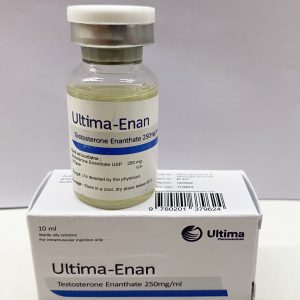
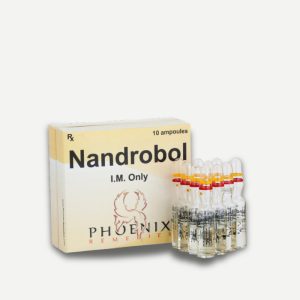
You’re not playing seven matches in a month, but the underlying principle transfers: recovery is the ceiling on performance. Whether you’re natural or enhanced, the same hierarchy applies — sleep, nutrition and load management first; everything else is a small percentage on top. Those who do run compounds tend to get the best risk-adjusted results from recovery- and conditioning-oriented protocols rather than maximal mass cycles. If you want to compare conditioning-focused options, browse the range here:

Frequently asked questions
Has any player failed a drug test at the 2026 World Cup?
No major positive test has been reported during the tournament as of the group stage. The headline controversies of 2026 have been disciplinary and political rather than doping-related. Because samples are stored and re-tested for years, however, the historical record of any tournament can change later.
Why is altitude such a big deal at this World Cup?
Playing at the Estadio Azteca’s ~2,240 m elevation reduces oxygen availability, which lowers aerobic capacity and slows recovery between sprints. Teams acclimatise in advance, but the effect is real and measurable — and it’s one reason endurance-boosting methods have historically tempted athletes.
Do footballers use the same steroids as bodybuilders?
Generally no. Footballers who dope tend toward low doses of recovery- and endurance-oriented compounds, not the high-dose mass-building stacks associated with bodybuilding. The goals — speed, repeatability and recovery — are different. We break this down in detail in our World Cup doping guide.
The bottom line
The 2026 World Cup is a recovery experiment dressed up as a football tournament. Heat, altitude, a congested 104-match schedule and continental travel are pushing elite athletes to the edge of what the human body can repair in time for the next whistle. Most of that gap is being closed with legitimate sports science — but the same pressure that makes recovery the deciding factor is exactly what keeps the doping question permanently attached to elite football. For the deeper dive on the substances, detection and history, read our companion piece on steroids and the 2026 FIFA World Cup.
Related reading
- Steroids and the 2026 FIFA World Cup: Doping, Detection and the Race for Glory
- How Social Media Is Pushing Steroids, SARMs and Peptides (2026)
- TRT in the UK 2026: Complete Guide to Testosterone Replacement Therapy
Educational information only. This article does not allege doping by any specific player or team. Anabolic steroids and related substances carry serious health and legal risks — always consult a qualified medical professional.